
The old Sauvignon Blanc vines in our Gimblett Road vineyard gave Nigel Sheridan, Winemaker, such beautiful fruit that he sent its juice straight from the press into barrel and left it to ferment on its own wild yeast with nothing added – a little risky, as he admits, but a punt he was happy to take. That freedom is what small batch winemaking at Pask is about: the experimental side of what we do, where our winemakers can follow something outstanding in the vineyard or the winery, and have a bit of fun making really good wine along the way. Our winery was built for it, with small tanks that let us respect each parcel of grapes, and our two winemakers, Matt Patterson-Green, Head Winemaker, and Nigel, work every one of those parcels by hand and with as light a touch as they can.
Why small batch is where our winemakers get to experiment
When a parcel stands out, we keep it apart, nurture it in its own tank or barrels, and bottle it as a wine of its own. For Nigel, small batch is the part of our winemaking with no rules. Our Small Batch Malbec began that way, with four barrels so good that Nigel left them an extra year in barrel, tasting them all the way through, to ensure the wine was perfectly integrated by the time it was released.
Nigel does not see Small Batch as a tier above or below the rest of the range. It sits off to one side of our Gimblett Gravels wines, a place where the team can wander a little off the map, whether that means a wine made entirely from Malbec or a Sauvignon Blanc fermented in barrel. Nigel was drawn to both because they’re wines few others make: “Malbec on its own is rare in New Zealand, and barrel-fermenting Sauvignon Blanc is something only a handful of producers take the time to do.” The range has no fixed line-up and changes from one year to the next as the vineyard gives us something new to try, with different techniques, blends, and even labels.
Matt calls the freedom to work this way "a luxury that not a lot of wine companies have", one that means we never have to do the same thing every time. It lets him trial, taste, and experiment, following a parcel to see how far it can go, and he counts being able to ferment lots of small batches in small tanks among the biggest advantages he has as a winemaker.
How small tanks let us run with an outstanding parcel
Small tanks give an outstanding parcel a vessel of its own, and our winery holds lots of them alongside its large ones, because our winemakers believe a wine is made in the vineyard long before it reaches the winery.
Picking half a row for its own tank
Because our tanks run from small to large, we often pick to fit the tank, taking as little as half a row when that is where the fruit we want is growing. Matt explains that a small, high-end pick of a couple of tonnes would be lost in a bank of ten-tonne fermenters, so we keep a fermenter of about a tonne and a half on hand and pick exactly enough to fill it, choosing only the finest fruit in the block. Some of those parcels ferment in small dairy vats, and each tank can be managed slightly differently from the one holding the next row over.
Watching a wild ferment in a small tank
A small tank lets our winemakers watch each ferment closely and step in early. For Nigel, fermentation is the most critical stage in shaping a wine. With the tank right in front of him, he can see anything unwanted and remove it, and Matt sees this hands-on work, done without mechanical intervention, as a way of treating the fruit with respect. Our winemakers like to let a small batch ferment run on wild yeast with no temperature control, which tends to make it quicker and can bring more complexity. They also value the freedom to leave a ferment on its skins, deciding parcel by parcel how long a ferment stays on them and running some of our high-end wines a little longer.
Our barrel-fermented Sauvignon Blanc went straight from press to barrel, without ever seeing a tank. Nigel split it between two puncheons, larger barrels that keep the aromatics fresh, and two smaller barrels that add a hint of nuttiness and vanilla. He also chose not to settle the juice, so it went into barrel cloudy, with all its solids. Fermented that way, with the lees stirred through, the wine picked up extra texture and a softness that, for Nigel, makes it a Sauvignon Blanc for Chardonnay drinkers.
How small parcels are built into a blend
Not every outstanding parcel is bottled on its own; many become parts of a blend, each with its own strength, layered together over fifteen or twenty blending passes until the wine feels complete. In red winemaking, and above all in the Bordeaux and Burgundy styles, the more small ferments there are to choose from, the greater the blending opportunity, so a winery full of small tanks gives our winemakers a deep set of parts to work with.
Matt likes to compare it to making a sandwich. You can build one at Subway by picking twenty different fillings, or you can build a gourmet sandwich at home, with a sliver of this and a layer of that until the mixture is just right, and twenty different parcels of fruit let us make that gourmet sandwich. One parcel might have lovely aromatics but a hole in the back palate, while the next has a really strong back palate and a thinner mid palate; laid together, they begin to make an aromatic wine with weight through the middle and the finish. From there, our winemakers look for a parcel that is strong at the front, or one with real length or breadth, and keep layering them in, tasting as they go.
A Pask blend is never one-and-done, and every pass carries a good deal of background work, but that patience lets us make a wine that is complex and complete. What Matt hopes you find in the glass is a wine you simply enjoy, one that never tastes, as he puts it, "furry or edgy or a little bit square on the sides", and has length, breadth, presence, and longevity in their place.
Why a parcel kept apart shows its patch of the Gimblett Gravels
A parcel fermented on its own gives a truer picture of the site and the season that shaped it. That’s why Nigel prefers to draw each Small Batch wine from a single block on our vineyard, and why he keeps the winemaking as hands-off as he can: the less of the winemaker in the glass, the more the vineyard shows through. Our vineyard sits on the Gimblett Gravels, an ancient Ngaruroro riverbed whose stones reflect heat back onto the vines for two or three extra hours into the early evening. There’s more on the site, its warmth, and how it ripens Bordeaux varieties in our blog on what the Gimblett Gravels gives our Syrah.
Questions about Pask Small Batch wine
Can you cellar Pask Small Batch wine?
Yes. Nigel makes our Small Batch wines to cellar, for a wine lover who is happy to put a bottle away and give it time. It will only get better.
How many bottles are in a Pask Small Batch run?
A Small Batch run is usually about a thousand bottles, and at most fifteen hundred. Each run is a one-off, so once a Small Batch wine sells out, it is gone for good.
Are all Pask Small Batch wines from the estate?
Yes, every Small Batch wine is a single-vineyard wine from our estate on Gimblett Road. Instinct is the one range of ours made with fruit from beyond the estate.
Where can I buy Pask Small Batch wine?
You can buy our Small Batch wines online and at our cellar door on Omahu Road in Twyford, Hastings.
When to choose Small Batch, and when to choose the rest of our range
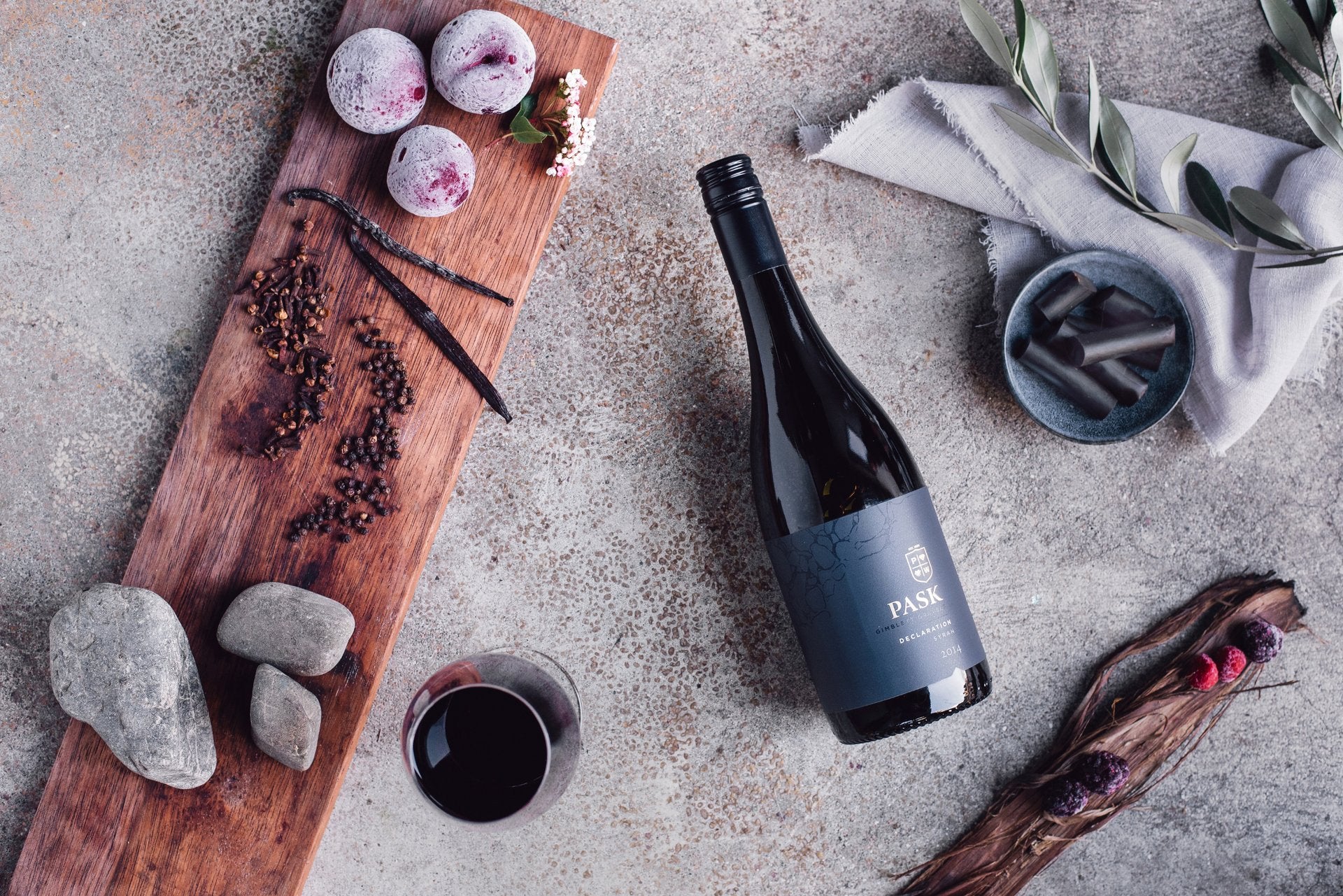
Reach for a Small Batch wine when you want something unique and experimental, a wine lover's bottle made to cellar and a real reflection of a point in time, and put it away knowing the next run will be something different again. For a wine to keep coming back to, our Gimblett Gravels range is our core estate range and the place to start, and Declaration is the range we declare to be our best, each wine made only when the vintage earns it. You will find the current one-offs among our Small Batch wines, alongside our Gimblett Gravels and Declaration ranges.