

By Matt Patterson-Green, Head Winemaker, Pask. Last updated 23 June 2026.
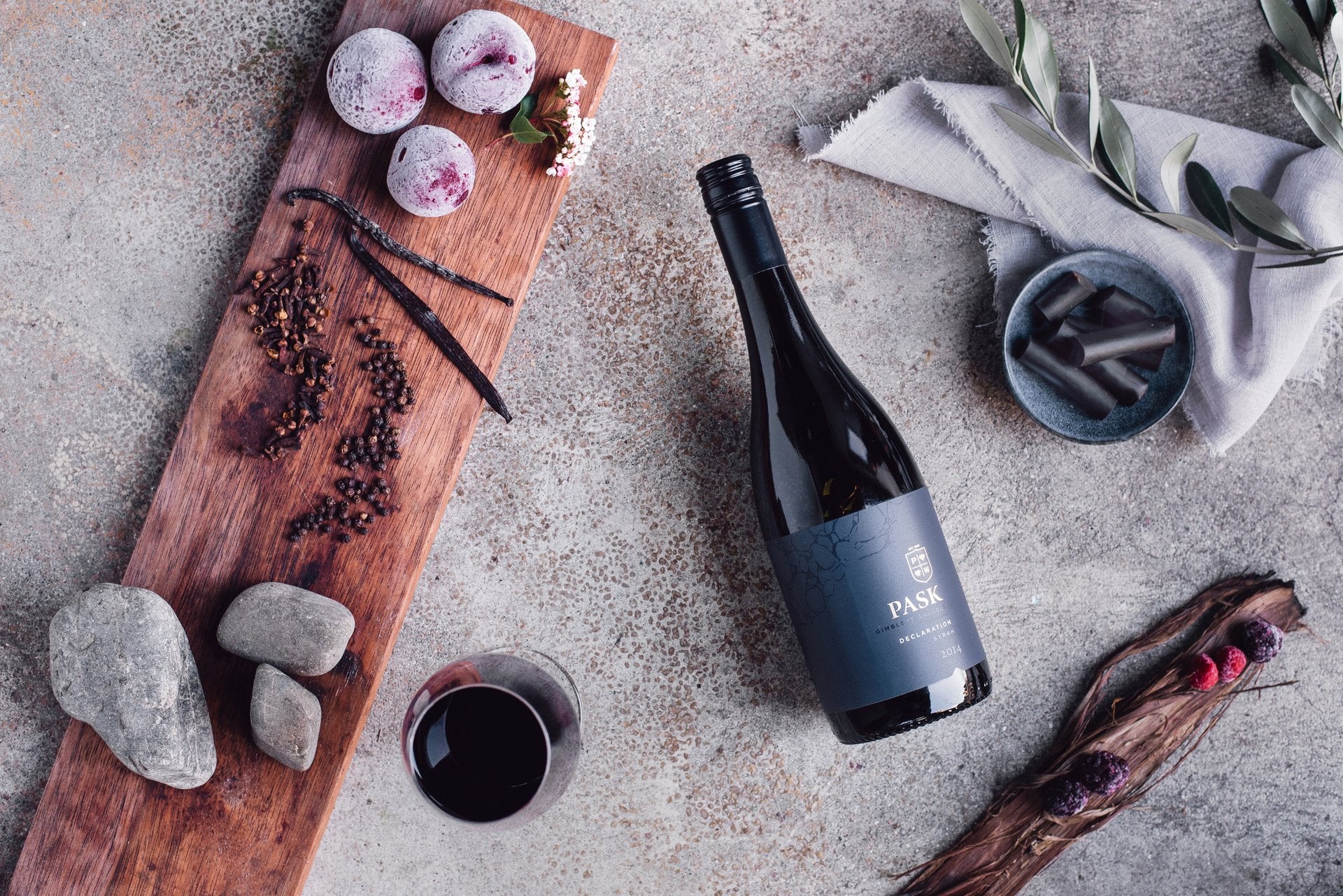
Our Gimblett Gravels Syrah, grown on a single vineyard, has notes of dark fruit, blackberry and plum, with layers of black pepper and a fine, even tannin that holds the wine together. That profile comes straight from the ground it's grown on. The Gimblett Gravels sits on the same latitude as Bordeaux, and its stony riverbed soils hold the day's heat and keep the grapes ripening late into the evenings. At Pask, every Syrah we make comes from our estate-grown vineyard on those gravels, so what you taste in the glass traces back to one vineyard rather than a blend across several sites.
Below is what our Syrah tastes like, why the gravels produce that flavour, and what to pair with it.
Taste characteristics of a Gimblett Gravels Syrah
Our single-vineyard Gimblett Gravels Syrah leads with dark fruit, blackberry, black plum, sometimes a darker note of blackcurrant, carried by spice and a fine-grained tannin. It's a medium-to-full-bodied red, more savoury than jammy, with the kind of structure that lets it sit alongside food rather than overwhelm it.
What's telling is what our Syrah doesn't taste like. In cooler sites the fruit can stay green and primary: the herbaceous green-peppercorn and tobacco-leaf notes you find in a leaner, under-ripe style. On the gravels the fruit ripens further, and the character moves on, away from those green edges and into something more evolved: smoky, spiced, with a savoury, almost meaty depth and the dark fruit underneath it.
It comes down to heat. The gravels, laid down by the Ngaruroro River and exposed in an 1867 flood, are coarse and stony, soaking up the day's sun and holding it. They reflect that warmth back for an extra two or three hours into the early evening, leaving the vineyard a couple of degrees warmer than most of Hawke's Bay during the part of the day that matters for ripening. The grapes reach a more complete ripeness, which builds depth and concentration without the wine having to fight itself. As I'd put it, it's not having to override or fight the natural acidity that's so common in New Zealand wines. The Gimblett Gravels is almost a micro-snapshot of what Europe can achieve: the same long, warm ripening that the classic Bordeaux varieties were built on.
You can taste that in the current release. Our 2023 Gimblett Gravels Syrah was rated 92 points by James Suckling, who found "dark cherries, violets and a lift of peppercorns" over fine tannins and a flavoursome finish.
What makes Pask special — one vineyard, small parcels?
Every Pask wine comes from a single vineyard, about 60 hectares on the Gimblett Gravels, the same Gimblett Road operation since the original vines were planted there in 1985. This model gives a direct line between the wine in the glass and the terroir of one specific place.
Three things shape how our Syrah turns out:
- One vineyard, known block by block. Because every grape comes from a single site, we know each block and how it ripens. What you taste is one place, not the average of many.
- Small tanks, worked by hand. Everything is done by hand at Pask; it's all analog. The winery runs a range of tanks, from one-and-a-half tonnes up to ten, so we can match the fermenter to the pick. A standout parcel, even half a row of vines, can come in on its own and ferment in a small tank we manage by hand. For the high-end fruit we'll often run a little longer on skins. It's a more respectful way of working the fruit, and a luxury a lot of wineries don't have.
- Built in the blend. Having lots of small parcels is what lets us build a wine rather than just pour one. Think of the difference between a sandwich grabbed off a counter and a gourmet one made at home, a sliver of this and a layer of that. Each small parcel brings something different: one is all aromatics and front palate, another carries the mid, another the length on the back. Our final blends aren't one-and-done; they're layered over fifteen or twenty passes until the wine is complete, so it doesn't taste furry, edgy, or square on the sides, but has length, breadth, and presence right through.
We were one of the first to plant vines on the Gimblett Gravels, and the vineyard celebrated its 40th vintage in 2025. That's four decades on the same site, a long time to learn how one piece of ground behaves.
Estate vs Declaration Syrah — what changes across the tiers
We make our Syrah at two levels, and they're built for different moments.
The Estate Syrah is the everyday expression: the current release is the 2023, at $25 a bottle, part of our single-vineyard Gimblett Gravels range. It leads with dark fruit and spice, ready to drink now, made every year. The Declaration Syrah is our reserve wine, made only in exceptional vintages; the current release is the 2021, at $50 a bottle. In a strong year, the best parcels from the vineyard go into Declaration. The 2019 Declaration Syrah won Gold at the Decanter World Wine Awards — the reserve cut of the same single-vineyard fruit.
That's the part worth understanding before you choose: a single-vineyard wine moves with the season. That variation is proof the wine reflects a real place and a real year, rather than a recipe held constant. The Estate gives you the house style; Declaration gives you what the very best fruit of an outstanding year can do.
What to eat with Gimblett Gravels Syrah
Gimblett Gravels Syrah pairs best with savoury, slow-cooked, and gently spiced food. Its dark fruit and pepper sit naturally beside roast and braised meats, while the fine tannin cuts through fat without fighting it.
A few pairings that work:
- Roast lamb or slow-braised beef. The classic match. The wine's savoury edge and structure stand up to red meat, and the spice picks up rosemary, thyme, and a good crust of seasoning.
- Peppered or charred dishes. Anything with a black-pepper crust, char-grilled, or finished over flame. The smoke and pepper in the cooking echo what's already in the glass.
- Game and venison. Hawke's Bay venison and the wine's dark, savoury fruit are a regional match worth seeking out.
- Mushroom and lentil dishes. Not just for meat-eaters: earthy, umami-rich vegetarian cooking (a mushroom ragù, a spiced lentil braise) meets the wine's savoury side well.
- Hard, aged cheese. A mature cheddar or a firm alpine-style cheese works better here than anything soft or fresh.
The general rule: match the weight and lean savoury. A medium-to-full Syrah wants food with body and depth, not delicate flavours it will roll straight over.
Where to taste our Gimblett Gravels Syrah
The best way to understand a single-vineyard Syrah is to taste it next to the place it comes from. You can explore our Gimblett Gravels Syrah online, or come and taste it at the cellar door on Omahu Road in Hastings, where you look straight into the working winery through glass while you taste. If you want to see where the wine starts, our single Gimblett Gravels vineyard is the 60 hectares behind every bottle. For the wider picture of the region, our guide to Hawke's Bay wine country sets the scene.
Frequently asked questions
What does Gimblett Gravels Syrah taste like? Gimblett Gravels Syrah tastes of dark fruit, blackberry and plum, with black pepper and a fine, even tannin. It's medium-to-full-bodied and savoury rather than jammy. The character comes from the region's stony soils, which hold heat and ripen the grapes late into the evening on the same latitude as Bordeaux, so the fruit ripens past green, herbaceous notes into something smokier and more savoury.
How is Pask's Syrah different from other Gimblett Gravels Syrah? Every Pask Syrah comes from one vineyard on the Gimblett Gravels, rather than a blend across several sites. That single-vineyard model gives a direct correlation between the wine and the terroir of one specific place. We were one of the first to plant on the Gravels, and the vineyard reached its 40th vintage in 2025. The wine is handpicked, fermented in small parcels in tanks we manage by hand, and built up in the blend over many passes.
What food pairs with Gimblett Gravels Syrah? Roast lamb, slow-braised beef, venison, peppered or char-grilled dishes, earthy mushroom and lentil cooking, and hard aged cheese. The wine's dark fruit and black pepper suit savoury, slow-cooked food, and its fine tannin cuts through richer dishes without drying them out. Match the weight of the food to the wine and lean savoury.
Why is the Gimblett Gravels good for Syrah? The Gimblett Gravels sits on the same latitude as Bordeaux, and its coarse, stony riverbed soils retain the day's heat and reflect it back for an extra two or three hours into the evening, leaving the vineyard a couple of degrees warmer than most of Hawke's Bay, with milder nights than other NZ regions. That long, warm ripening builds dark-fruit depth and the savoury spice that defines the region's Syrah, without stripping the wine of its natural acidity. The soils were laid down by the Ngaruroro River and exposed in an 1867 flood.
What's the difference between Estate and Declaration Syrah? The Estate Syrah is our everyday single-vineyard expression, made every year. Declaration is the reserve wine, made only in exceptional vintages from the best parcels of the vineyard, and in a weaker year there may be no Declaration Syrah at all. The Estate gives you the house style; Declaration shows what an outstanding year's best fruit can do.