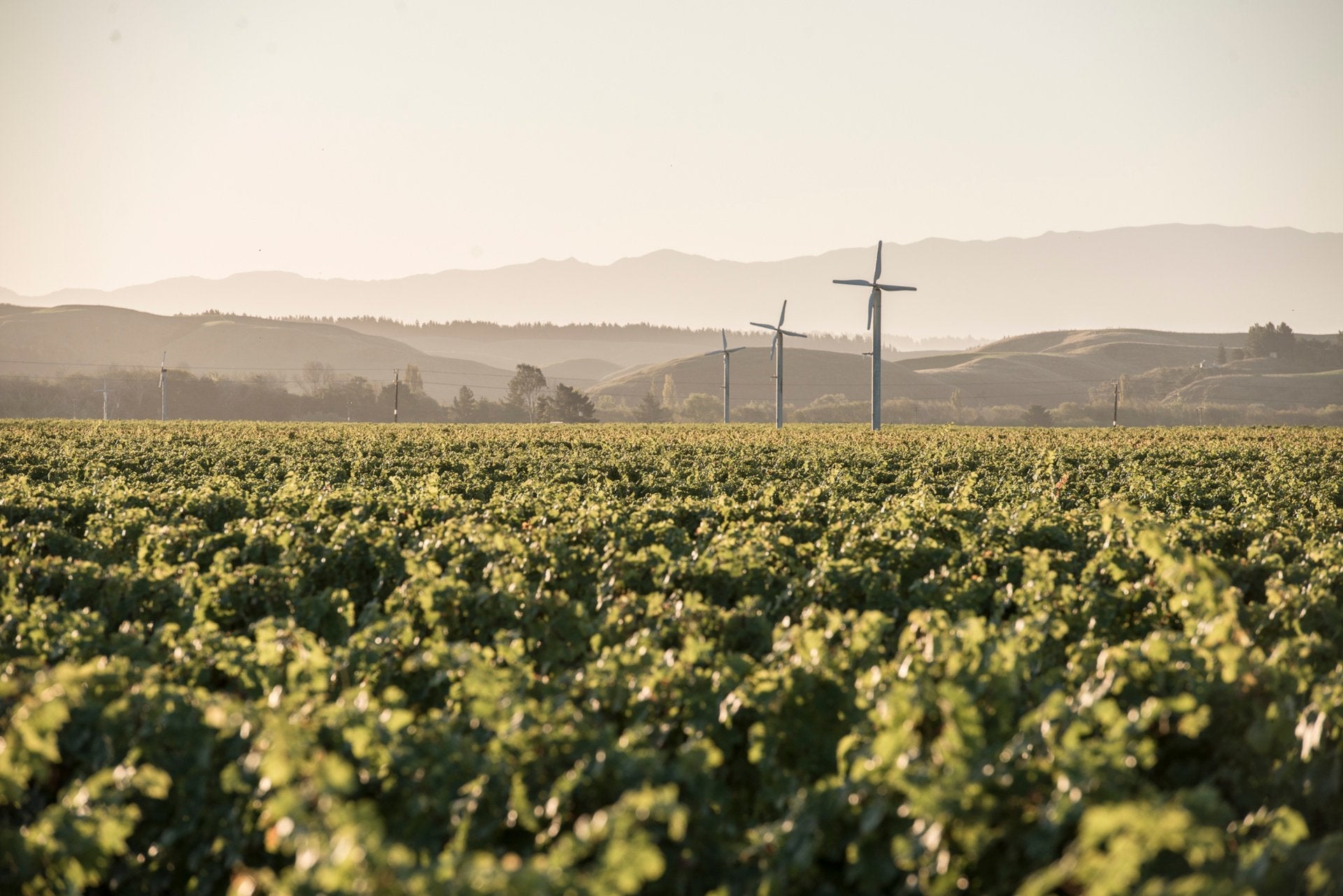


Sustainability in Practice at Pask Winery
Respect for the land, the community, and our environment has been part of our business strategy and philosophy from the day we planted our first vines on Gimblett Road in 1981. Since then, Pask has been committed to leading environmental responsibility and sustainability within the New Zealand wine industry.

A Long-Term Commitment to Sustainable Winemaking
In 1998, Pask Winery became one of the first wineries in New Zealand to achieve sustainable winemaking status, reflecting our belief that the integrity of our wines depends on owning the full winemaking process and practising sustainable methods at every stage.
For us, sustainability is not a single initiative or certification - it is an all-encompassing philosophy that guides how we grow, produce, and care for our vineyards over the long term.
Sustainable Vineyard Practices
We remain attentive to the evolving needs of our vineyards and apply best-practice sustainability across all aspects of vineyard management.
Key practices include:
-
Soil health and erosion management
Monitoring for erosion risk and soil compaction, while maintaining or increasing organic matter in the soil. -
Reuse of grape marc
Returning used grape skins to the vineyard to be spread among the rows, with any excess donated to a local mushroom farm to ensure responsible use of winegrowing by-products. -
Responsible use of inputs
Avoiding agri-chemicals and nutrient applications unless absolutely necessary, and only when approved for use by Sustainable Winegrowing New Zealand. -
Water conservation
Conserving water in accordance with resource management protocols. -
Vineyard renewal
Replacing unproductive or diseased vines as soon as feasible to ensure the best use of vineyard land and resources.
Industry Collaboration and Biosecurity
Pask is also committed to broader New Zealand Winegrowers initiatives, including the Virus Elimination Project, which focuses on monitoring and controlling grapevine viruses with the long-term goal of maintaining virus-free vineyards.
This collaborative approach reflects our belief that sustainability extends beyond individual vineyards and contributes to the health and resilience of the wider wine industry.